
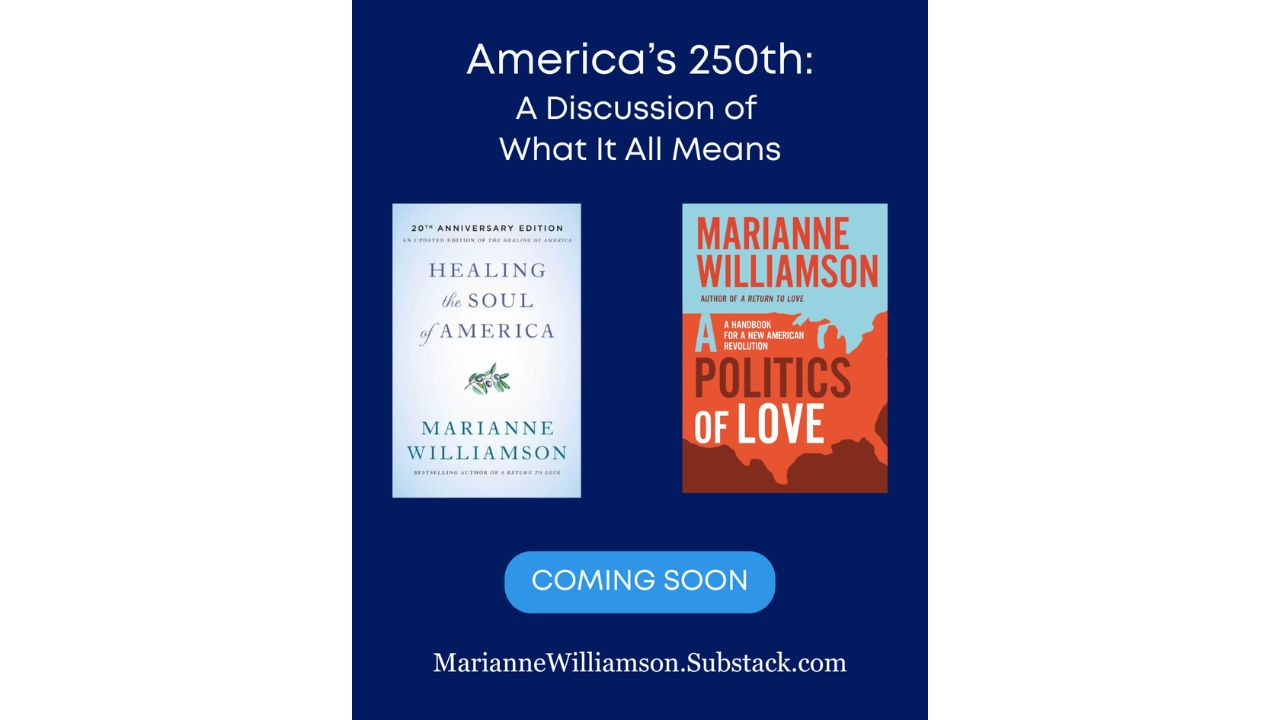
Chapter 1
MYSTICAL POWER
Politics has become the active involvement of an increasingly smaller subset of the American people. Out of 163 democracies in the world, we reportedly rank among the lowest in democratic participation. Instead of a broad-based citizen involvement, politics has become more of a spectator sport—a separate activity in which only some among us participate. This is hardly the sign of a healthy democracy. People have disengaged from the democratic process for many reasons, not the least of which is that the average person seems to feel that his or her personal involvement doesn’t really make much difference. And those who for that reason no longer vote—who to the casual observer might seem not to care, who feel that there is no point in trying because some powerful elite has it all sewn up—are increasingly correct in their assessment.
Cynics have a point, after all. One look at the evening news, and it’s clear that politics has become more of a mean-spirited pursuit than a noble pursuit; the will of the people seems not to be the driving force of American policy; the general welfare of the people is arguably not the primary motivation of most governmental behavior. But if the American people don’t take our government back, re-engaging a process we have chosen to ignore for a while, then we have no right to complain about those who would take it over in our absence. Those who can see what’s wrong with the process are the last ones who should be sitting it out.
Yet where does one start? Many of us haven’t been involved in political action for the last ten or twenty years, or more. Most Americans are so stressed out just trying to survive. The economic tension that pervades most American households—quite contrary to all the official protestations that the economy today is so good (yes, good for a few, obviously, but not good for the many)—makes cynicism about politics seem reasonable. People have had it with the government. It’s not that we’re apathetic about our country, but merely that we’re disgusted with politics today. It’s obviously a corrupt and sullied process, and how can fresh flowers grow in dirty water? That is what we need to find out.
THOMAS JEFFERSON WROTE to James Madison in 1787, “I hold it, that a little rebellion, now and then, is a good thing, and as necessary in the political world as storms in the physical.” Healthy rebellion is not a negative emotion, but rather a politically legitimate expression of justified dissatisfaction. Dissatisfied people are often dissatisfied for a reason, and where we have no taste for rebellion, we have no taste for freedom.
If we do not rebel in some way against conditions that arouse our anger, then often the anger turns inward, becoming depression or even physical illness. Failing to question the root of the anger, our standard response these days is to merely mask the pain. And the same system that we might otherwise be angry at has myriad ways of turning our pain into a profit center. There is nothing serene or transcendent about allowing ourselves to be distracted from looking at the rot now permeating our democratic system; to do so is essentially a slave mentality.
So what, then, are we to do with our anger? All anger stems from a sense of limited freedom—freedom to be, to say, to feel, to do. In the United States particularly, people unconsciously rebel against restrictions on our freedom because we are aware this is supposedly the land of the free. Yet whether our anger and resentment is funneled through Right-wing or Left-wing politics, anger is a low-level energy that ultimately re-creates the conditions that fueled it to begin with. The enlightened activist is looking to love, not to anger, to solve the problem. And that is our task at this time.
So what would love do now, if called in to help us? Would, it transform the anger? Yes. Would it lead to destructive behavior? No. Would it lead to rebellion? Yes, in a way. It would lead to “divine rebellion. To nonviolent revolution. To the complete transformation of how we live with ourselves and how we live with each other. To a re-envisioning of the entire world.
This is the time, and this is the place. The twenty-first century. A new America . . . or else, just more of the same.
“DURING THE 1960S, America experienced its last rebellious generation. I was there, and much of what is happening today harkens back to that.
During that decade, people were politically engaged, taking to the streets to express our deepest passions about this country and its behavior. As with protestors who took part in the Occupy Wall Street movement or the Women’s March or the March for Our Lives, their energy created an electricity that affected the entire culture.
Yet the rebellious generation of the 1960s was ultimately quieted. For something happened then to take us off the streets and to keep us off. That something was violent threat and collective trauma, perpetrated on one generation and bequeathed to each one since as a legacy of those times.”
The baby boomers were young at that time, and the young respond to dreams and visions. Those who carried aloft the most eloquent visions of a possible America during the 1960s were literally shot and killed in front of the eyes of the young who so adored them. For my generation, carrying a brilliant dream of a noble collective future meant putting oneself in the line of fire. From President Kennedy, to his brother Bobby, to Dr. King, to the students at Kent State, the primary articulators of positive change, of dreams for our democracy in this stunning age, were permanently silenced—and the bullets that shot them psychically struck us all. Millions of us became in many ways like the son of Robert Kennedy, who having watched his father murdered on television, got stoned and never recovered.
The invisible order that shot our heroes did not keep shooting, but began providing goods and services as quickly as possible to distract a grieving generation from our psychic pain. They did not leave us out of their conception of what America should be; quite to the contrary, they used us as their fodder, luring us into their planned environment of endless material consumption. We have been relatively quiet about anything meaningful ever since. Our leaders assassinated, our ranks dispersed, our generation received loud instructions: go home now, scatter, go to your rooms, and enjoy yourselves with all the toys we sell you.
We received a loud, silent message from those assassinations, an unconscious imprint that has become what psychologists call a “sponsoring belief” for an entire generation: “You can do pretty much whatever you want within the private sector. You will still be free, of course—to buy the red one or buy the blue one. But leave the public sector alone.” And no one had to say what sentence comes next: “Or we might kill you, too.”
And so we did what we were told to do, and taught our children to do the same. We poured our prodigious talents and indisputable genius into the private domain. We left the public sector, which is essentially the political sector, to those—whoever they were—who wanted it so much that they were willing to go to such lengths to control it.
And thus we became a class of rich slaves. Our fear that what had happened to our slain leaders might happen to us, our naïve and immature preoccupation with drugs, and ultimately our complete seduction by a consumer society conspired to turn us into the greatest fuel source for the status quo that America has ever seen. Given our previous, youthful repudiation of the downside of American materialism, the irony here is almost grotesque. We who sought to heal America once before have helped to run her into the ground.
We have countenanced the undermining of our political system; we have tolerated the widening gap between rich and poor in America to levels deemed unsustainable by serious economic indicators; we have sold the health and welfare of our children and our environment to the highest bidders. Like Esau in the Book of Genesis, we have sold our birthright for a mess of pottage. Even more important, perhaps, we were so stoned on our very way of life, so distanced from our own authentic human knowing, that we hardly seemed to realize what a black hole these things were forming in our national soul.
With every generation since the Sixties until now, Americans became more cynical, weary of politics, and too tired to dissent. Our frantic productivity created the illusion of functionality, and as producers and consumers, certainly we were as active as ever. But as citizens we became anemic, not so much energized as propped up by artificial highs. Behind all manner of false merriment lay a river of pharmaceutical and other efforts to buffer us from our legitimate pain. We told ourselves these were the best of times, but in many ways we were slowly becoming collectively depressed. The children of God have not been shining our lights at anything close to full wattage.
The baby-boomer generation became like a logjam in the river of American history; as long as we were psychologically stuck, everyone behind us remained somewhat stuck as well. We were born to proclaim that a better world is possible, yet then were warned that to do so is not a good idea. We were thus distracted from our spiritual mission. We are not separate but one, and we long, at the deepest level of our being, to gift each other with our internal abundance, not manipulate each other for mere external gain.
We disengaged from politics after the 1960s because of a blow to our essential selves, and in the absence of that engagement, power was usurped by the interests of a relative few. This was, and is, a spiritual crisis first and a political crisis second. America’s real problem is our fear to express ourselves. Fear to be who we were born to be, and fear to do what we most long to do. We do not break through that fear by further disengagement. We break through the fear by embracing love.
What we longed for before, and what we long for now, is to love each other. And that is what the heroes of the Sixties were saying. Looking back at the speeches of Dr. King or Robert Kennedy, one is struck by both the genius and the tragedy of their lives. They did not just say, “Let a man love his wife, or parents love their children.” They said, “Let us love all life.” That is what made them so dangerous to the status quo. For that they lived, and for that they died. They pointed to the next step in America’s moral evolution—the expansion of our compassion—and that is a step that by definition repudiates oppression and injustice.
Those of us who were young when our older heroes were murdered then aged ourselves. We sometimes ask ourselves, “What will I say to myself on my deathbed? Will I know that I did what I came to earth to do?” And the answers don’t always please us. For millions of people today, the thought that we might die knowing in our hearts that we didn’t really do what we came here to do is actually scarier than the thought that they might kill us if we do. Secrets still lurk regarding the political assassinations of the 1960s and they continue to haunt our collective psyche. But we have processed much in the years since.
The baby-boomer generation finally matured emotionally. We grieved, and we began to heal. Younger generations now contribute their own unique drama and genius to the maelstrom of American society. There is a window of opportunity now for Americans to reclaim lost ground.
There is new possibility in the air today, a miraculous awakening and a change in the way we live our lives. It is a spiritual renaissance with social and political implications. Restoration and hope appear all over, as a rising environmental, community, and spiritual consciousness resurrects the dreams of former times. Civic brotherhood is beginning, in many places, to replace the false gods of self-centeredness and greed. There is a yearning among us to make right the world.
Will this become a broad-scale social force for good or merely isolated cases of cultural sanity? An America intending to heal itself will unscramble the information from which we have been systematically distracted for years, atone for and grieve our national errors, and consciously restore the political process to its role as an enlightened tool. It will take a miracle to do this, but miracles are always at issue in any great movement of history. Was not the American Revolution a miracle? Was not Indian independence from Britain a miracle? Are not miracles what our hearts most long for now?
Out of the ashes rises the phoenix. It has been almost half a century since the end of the Sixties, and Americans are again taking a deeper look at societal issues. Yet many are doing so through the filter of a higher awareness, unshackled by the mechanistic prejudices of the twentieth century.
There is darkness without; but no darkness, limitation, illusion, or fear can stand before the force of uplifted consciousness. Perhaps we are set to embark on a new chapter in our evolution as a nation, rededicating ourselves to the transcendental nature of democracy, declaring en masse our intention to have it rise at last to the level of its true potential.
“We have in our hearts,” said Martin Luther King, Jr., “a power more powerful than bullets.” It is time for us to use that power now, to free our nation and to free ourselves. Mystical power is the greatest power, in politics and in life. It reveals to us that bodies die but ideas do not, as long as people’s hearts embrace them. It is time to resurrect the ideas that truly make this nation great.
“I ONCE SAID to a friend of mine, another author who writes on spiritual subjects, “We really should be addressing political issues.”
“Yeah,” he responded, “I think you’re right.”
Then a pause, an angst-ridden silence.
But there’s only one problem,” he said. “I really hate politics.”
It’s a conundrum: we don’t want anything to do with politics because it’s such a dirty business, yet turning away from it altogether has gotten us where we are today. Anyone who looks at the last few years and still says things like “It doesn’t really matter who we vote for” is living on an alternative planet.
Many people would love to feel that politics can be a high-minded effort, but it’s hard to see how, in today’s political climate. Particularly when looked at from a spiritual perspective, political involvement seems tawdry and low. It’s the last place any of us look anymore for hope or inspiration.
“I just want spirituality in my life,” a friend said to me recently. “None of that other stuff matters to me.”
And yet, what is spirituality? Is it just another compartment in our lives, like relationships, career, money, or health? Or is it something all-inclusive—the soul’s oxygen, the life-giving agent meant to grace and revitalize all of life? If spirituality is relevant to anything, then it is relevant to everything. How can we speak seriously of a God who cares what happens to you and me, but somehow would not have us care about what happens to each other?
So how do we make spirituality relevant to politics? Ten years ago, if I asked that question, I would receive answers such as these:
• From political types, that “Spirituality is not relevant to politics. Don’t start with all that spiritual stuff. It has nothing to do with politics. Politics is about the real world.”
• From spiritual types, that “Spirituality makes politics irrelevant. Think about more positive things. Politics is just a low-level, addictive power game. Forget it. Real change can’t come from there.
But such voices have begun to give way to a more spiritually sophisticated perspective. Just as the Sixties generation sought a blend of political and philosophical relevance, so a new generation is doing the same. It’s popular in some circles today to say, “Face it—the Sixties didn’t work.” But in many ways it did work (we ended a war, among other things), not the least of which is the permanent mark it left on the souls of so many of us still here, still kicking, and ready to once again take up the mantle of enlightened activism. For millions of Americans whose souls were branded forever by the magic of that time, to say it didn’t work is a rather obvious attempt to kill whatever remnants of its audacious spirit might still remain alive.
To blend love and politics is indeed audacious. Politics is a fear-based pursuit in America today, and love is the only thing that fear fears. Love is the ultimate political rebellion. During the 1960s, love and politics were uttered in the same breath and sung in the same song. “All You Need Is Love” was a song we sang at political rallies.
We have not forgotten that, so much as we have lived with the wound that was left on our hearts when the music died. For by the mid-Seventies, the paths of love and politics diverged. They would no longer seem even distantly related. Many who stayed interested in politics would come to trivialize the consciousness movement, and many of those interested in consciousness would start to ignore politics. Both sides then tended to smugly, self-righteously dismiss the other as irrelevant, thinking that they and they alone knew what it takes to change the world.
The consciousness movement concerns itself with addressing the causal level of events. All things in the outer world are reflections, or effects, of consciousness; mere changes in external conditions are thus seen as temporary palliatives, at best, for the problems of the world. Enlightened laws can be passed, but then repealed. Only when the mind has itself transformed does the world achieve any permanent change. The search for higher consciousness is the effort to attain a level of mind from whence only peace can flow, and in the presence of which only peace can exist.
Those interested in traditional politics, on the other hand, are primarily focused on the world of effects. They argue that we cannot afford to just sit around meditating while so much human suffering goes unchecked. They use the means of the material world to solve the problems of the material world, and are apt to see the issues of enlightenment as airy-fairy when applied to politics.
Those interested in traditional politics, on the other hand, are primarily focused on the world of effects. They argue that we cannot afford to just sit around meditating while so much human suffering goes unchecked. They use the means of the material world to solve the problems of the material world, and are apt to see the issues of enlightenment as airy-fairy when applied to politics.
Today, it is the remarriage of our philosophical and political passions that holds the key to our political renewal. It is not either/or, but both—both cause and effect, mind and body—that need addressing in order to create a positive, effective politics for the twenty-first century. It is the political process itself that lacks, and that is because neither our hearts nor our higher minds are currently particularly active there. We need to re-create politics now as a mystical pursuit, bringing our souls to bear on the effort to make the world a better place.
And that is what is happening now. Many political types are saying, “Maybe politics really does need some deeper roots, some way to get past all the hatred,” and spiritual types are saying, “We need to extend the principles of enlightenment into social and political realms.”
From the early American Quakers to Henry David Thoreau, to Mahatma Gandhi, to Martin Luther King, Jr., the effort to bridge the inner-outer duality has been one of the high points of human philosophy and endeavor. America has been fertile ground for such philosophy since our earliest days. It is the message that our spiritual and political evolution are not separate, but intimately and potentially even gloriously connected. It’s the suggestion that we can’t give to the world what we have not achieved within ourselves, and we can’t keep for ourselves what we have not yet given to the world. And ultimately, it’s the message that maybe, just maybe, love will someday rule the world.
IN THE MOST advanced stages of ancient Egyptian culture, the pharaoh was not just given his job for life. At regular intervals, he had to prove to his people that he still had what it took to do the job, displaying physical, moral, and mental strengths for all his subjects to witness. Similarly, statues of ancient Egyptian gods were reconsecrated yearly through prayer and rituals, as though it could not be taken for granted that the genuine force within material substance would remain fully active without a regular reassertion of human devotion.
So it is that while Americans still go through the rites of democracy—political campaigns, elections, inaugurations—there is among us the sinking feeling that these rites are losing their spiritual force. Anything, no matter how initially pure, becomes corrupted if it is no longer connected to people’s hearts. And that is how so many of us feel today. Democracy, we know, is still a vital concept—in fact, more so now than ever. But American democracy today is like a beautiful treasure housed in a decrepit building; our democratic principles are too good for our politics.
The state of our politics reflects the state of our humanity. In order to renew our politics, we’re going to have to take a good look at the principles, or lack of them, that underlie our society today. As long as our social order rests on obsolete principles—obsolete because they are spiritually blind—there will be no real breakthrough in our political realities. In the words of Gandhi, “The problem with humanity is that we are not in our right minds.
The principles underlying our social, political, and economic conditions deem us purely material rather than spiritual beings, economics rather than relationship-oriented, and separate bodies rather than united hearts. We view competition as the primary motivator of human creativity, which it certainly is not. We view the creation of wealth as the primary goal of human work, though it should not be. We treat each other as anything but brothers, though that is what we are. These misperceptions of who we are and why we are here are central to the problems of the world. They are illusions holding back the human race, keeping us limited to the lower energies of dense, material-plane consciousness at a time when we are ready to expand to new levels of awareness and joy. In withdrawing our attachment to them, in rejecting their claim on our imaginations, we can transform our experience of life on earth.
A philosophical shift of historical importance is occurring throughout the world. Yes, we know that we are rational beings. Yes, we know that the physical world is based on the laws of science. We also know—or remember at last—that in fact we are spiritual beings, too.
We are each of us divine essence, placed on earth to create the good, the true, and the beautiful. That goal is a compelling force that motivates us to higher heights than any contest or economic stimulus could ever come close to matching. There are within each of us God-given talents that do not respond to market pressure, yet spring to life in the presence of honor and respect. The spirit within compels us to serve each other rather than compete with each other, bless each other rather than condemn each other, and place our primary attention on the extension of brotherly love.
The twenty-first century is a crossroads for the human race. We are living at a time of both intensified fear and intensified love, both encroaching barbarism and spiritual renaissance. Our consciousness now is backed by so much material power that whether it is attuned to fear or attuned to love affects the future of the entire human race.
The spiritual renaissance of our time is like a mystical revolution of human consciousness, a surge of energy from the subconscious of a species that registers threat yet is intent upon survival. Love, like fear, is contagious. Unlike fear, however, love has ultimate authority over the forces of the world. It proceeds in spite of all obstruction. Every day, like the inevitable dawn, more spiritual light seeps into the world.
Awareness of spiritual tenets already colors our philosophical outlook in the new millennium—in time, it will dominate our politics and economics, too. Either love will begin to rule the world, or we will suffer the consequences of continued resistance to the supreme law of the Creator—that we love one another—too long past the point when as a species we knew better. To run counter to love is to run counter to life. One cannot do so forever and survive. That is true for a person and it is true for a nation.
In the 1960s, these words were written by Dr. Martin Luther King, Jr.:
We are witnessing in our day the birth of a new age, with a new structure of freedom and justice.
Now, as we face the fact of this new, emerging world, we must face the responsibilities that come along with it. A new age brings with it new challenges. . . .
First, we are challenged to rise above the narrow confines of our individualistic concerns to the broader concerns of all humanity. The new world is a world of geographical togetherness. This means that no individual or nation can live alone. We must all learn to live together, or we will be forced to die together.
. . Through our scientific genius we have made of the world a neighborhood; now through our moral and spiritual genius we must make of it [a] brotherhood. We are all involved in the single process. Whatever affects one directly affects all indirectly. We are all links in the great chain of humanity. . . . We have before us the glorious opportunity to inject a new dimension of love into the veins of our civilization.
The love so many of us would like to see injected into the veins of civilization must first pour into us. Society will not transform until we transform; what’s wrong “out there” is but a mere reflection of what’s wrong “in here.” This is liberating news if we see it that way. Once we recognize that our minds are the causal level of worldly events, then we are free to seek to change the world by changing our thoughts about the world.
Racial tension, decivilization of our cities, violence and drugs among our youth and in our neighborhoods, economic disparity between rich and poor, global strife, threats of terrorism at home and abroad—the most serious problems we face as a nation are not solvable through traditional political means alone, because they are the wounds of an internal disease. To simply imprison more criminals is not going to stop crime; to raise interest rates more or less is not going to make the American economy both abundant and just; and no amount of military might can ultimately control the bonfire of ethnic hatred erupting like wildfire all around the world.
A mere treatment of symptoms is not an adequate response to the diseases that plague us. A more enlightened politics will address the causal issues of our societal functions as well as their effects. We need a nonviolent assumption of the power of the soul to heal the pain of a world that has forgotten it has one.
Internal forces are bubbling up today like volcanoes of spiritual light. Extraordinary technological changes in our society are mere adjuncts to an equally powerful explosion of possibility within the human mind. It is not only the interconnectedness of the Internet but also the interconnectedness of our hearts that offer new and miraculous opportunities to mend the broken pieces of the world.
The bridge to a better world is a shift in mass consciousness, to a part of ourselves we have tended to keep out of the public realm. That part of us is not interested in traditional politics. It is neither a bridge to the past nor a bridge to the future, but a bridge to who we most deeply are.
It is who we are when we are hushed in church, near tears when they blow the shofar on Yom Kippur, honest and vulnerable with our therapist. It is the part of us least acknowledged, maintained, or seemingly even valued at all by the social order we have created around us. It is the part of us that still hopes for miracles and at times can even see them.
That place in each of us is the place of our true power; it is the key to our personal and political salvation. For it is from that inner, sacred place that we genuinely join with others. From elsewhere in the personality we can forge alliances, but we cannot merge. And from joining we emerge truly changed, having fertilized the garden that could yet become our Eden. We turn our backs on our lower natures, allowing the angels to breathe within us.
In every area of human endeavor, we see the reflection of a basic spiritual and psychological principle: where people join, breakthroughs occur. Where we are separate from each other—angry, polarized, and defensive—breakdown and disorder are inevitable. The way to heal social disorder, domestically or internationally, is to find our spiritual oneness. We don’t need deeper analysis of our sicknesses so much as we desperately need a more passionate embrace of the only thing that heals them all.
At the beginning of the twenty-first century, America was poised to experience either a rebirth or a catastrophe. We had lost our spiritual rudder, and without it we had neither individual nor collective wisdom. Our culture had lost its sense of sacred connection to any power or authority higher than ourselves. Our national conscience was barely alive as we slithered like snakes across a desert floor toward any hole where money lay. Nothing short of an internal awakening could heal us. Our children were prey to violence more vicious than that of most civilized countries, scientists were already warning of the urgent danger to our biosphere, and millions of Americans could barely contain their rage much longer in the face of continued social and economic injustice. Both major political parties steered the discussion of what truly ailed us away from that which actually does, for they had no context for a higher discussion. They were already more alike than different, and neither any longer home to truly serious political alternatives. They had become a game unto themselves.
On September 11, 2001, that national catastrophe came. The United States has been an injured giant struggling to regain our footing ever since. We have tried Democrats and we have tried Republicans, but something more than what either has come to symbolize is needed now.
Our political salvation will not come from our political system as it now exists. It will come from deep within us.
JUST AS DR. King spoke of the interconnectedness of all beings, we are also more conscious today of the interconnectedness of all aspects of our being. The brokenness of the outer world reflects a brokenness within ourselves.
The awareness of an internal oneness posits the unity of mind, body, and spirit. Mind and body are not separate, machinelike components of a compartmentalized self, although the thought that they are has permeated our present age. It has influenced our politics, our medicine, even our relationships to one another.
Such a mechanistic worldview, exalted in the Age of Enlightenment, was the philosophical outgrowth of Newtonian science. Sir Isaac Newton deemed the world to be like a great machine, which could be understood, and then mastered, through rational thought. At its time, the Newtonian scientific revolution represented a liberating advance in how human beings viewed their world, repudiating superstition and false mystification in favor of the exercise of reason. Several of our Founders—James Madison, Alexander Hamilton, and John Adams among them—aspired to be the Newton of politics and government, and the glories as well as the limitations of our American political system are rooted in their rationalistic sensibilities.
But the world is now awakening from the false premises of a mechanistic worldview, representing one of the most profound revolutions in the history of human thought. In time, that awakening will be brought to bear on every aspect of our lives. For science has now corrected and improved upon Newtonian physics. Heisenberg, Bohr, Einstein, and others established the principles of quantum physics, proving that reality is not quite as solid or objective or deterministic as Newton thought. As British physicist Sir James Jeans proclaimed, the world now turned out to be “not so much a great machine as a great thought.” Some “unreasonable” things are now proved to be true: time flows at different rates for observers moving at different speeds, solid atoms are largely empty, subatomic phenomena are both particles and waves, particles seem to affect each other at a distance even in the absence of a known causal connection, and, according to Heisenberg’s Uncertainty Principle, an object is affected by the act of being observed. Adding to the astounding conclusions of modern physicists, contemporary biologist Rupert Sheldrake has posited the notion of “morphic resonance,” suggesting that there is a unified field of consciousness connecting all life.
Quantum physics gives human consciousness a much more central role in the larger scheme of the universe than did Newtonian science, and this influences our philosophic as well as our scientific outlook. How we perceive and how we interpret things are clearly more than mere symbolic powers, opening the modern mind to a more spiritual interpretation of reality than has been intellectually in vogue for centuries. “The more I study physics,” said Einstein, “the more I am drawn to metaphysics.” Ironically, science has both deprived the soul of its centrality in modern consciousness, and now has given it back.
Our Founders were revolutionary and, for their time, modern thinkers, applying the then cutting-edge science and philosophy of Newton to the politics of their age. Should we not apply, in our time, the principles of modern physics and philosophy to the politics of our own? John Adams ascribed to be this nation’s political Isaac Newton; perhaps someone needs to come along and become our political Rupert Sheldrake
In the words of Thomas Jefferson:
I am not an advocate for frequent changes in laws and constitutions, but laws and institutions must go hand in hand with the progress of the human mind. As that becomes more developed, more enlightened, as new discoveries are made, new truths discovered and manners and opinions change, with the change of circumstances “institutions must advance also to keep pace with the times. We might as well require a man to wear still the coat which fitted him when a boy as civilized society to remain ever under the regimen of their barbarous ancestors.”
Today, the rationalism of the European Enlightenment is being repudiated by a more soulful worldview, just as in a previous age, Renaissance and Enlightenment philosophy repudiated the overly mystified thinking of the Middle Ages. In every historical era there ensues a creative argument with the past, moving humanity either backwards or forwards depending on who’s in charge. The progress of thought determines the course of human history, and our understanding of both the Newtonian hold on the era now passing, and the quantum possibilities of the age now upon us, provide the tools we need to create a more enlightened future.
TRANSCENDENT DEMOCRATIC FORCES have always been in the American air, with deep and penetrating roots in our history. The Quakers of early Pennsylvania, for example, fostered many of the enlightened attitudes inherent in the U.S. Constitution toward religion, freedom, and the rights of the individual.
Pennsylvania Quakers held profoundly inward-turning spiritual beliefs. They had no ministers, but rather believed in a universal priesthood of all believers. They believed God’s spirit is alive in every human being, this spirit to be accessed not through the written word but through the exercise of conscience. In order to live a life of true religious purity, they claimed, we are to constantly look inward to what they called the “Inner Light.”
This mystical philosophy was the guiding influence on Pennsylvania Quakers during the earliest days of this country; as such, it is as traditionally American as anything can possibly be. Quaker influence continued and spread. During the 1800s, Transcendentalism became a major philosophical movement in the United States. Inspired by the Quaker notion of an internal source of light, its main thrust was the exaltation of the role of intuition in connecting the individual to ultimate truth. American writers such as Ralph Waldo Emerson, Henry David Thoreau, and Walt Whitman created the glory and poetry of the Transcendentalist movement. They formed a counterforce to the materialistic worldview of the approaching industrial era, seeking in whatever way they could to preserve the power of the American soul in the face of an industrial onslaught.
In addition to the role of intuition, and in keeping with the Quaker emphasis on conscience, Thoreau, in his essay called “Civil Disobedience,” put forth the historic proposition that following the dictates of one’s conscience is more important than following the dictates of one’s government. That groundbreaking assertion became the basis for many subsequent political developments, including the prosecution of Nazi war criminals during the Nuremberg Trials following World War II.
In India in 1929, Mahatma Gandhi wrote in a letter to a friend that Thoreau’s essay had “deeply impressed” him.
Inspired in part by the message he garnered there, Gandhi founded the Indian Independence Movement, organizing a massive resistance to the British colonial occupation of India. He developed an entire political philosophy—calling it the philosophy of nonviolence to harness the “soul power” of the Indian people as an instrument of their common good.
Gandhi, himself a Hindu, believed in a universal spiritual Truth reflected in all the great religious teachings of the world. He wasn’t seeking to use spiritual power to achieve a political end; rather, he exalted a state of spirituality from which political healing naturally results. Today’s spiritual renaissance echoes that idea. Political healing flows from spiritual experience because all healing flows from spiritual experience.
According to Gandhi, a nation has a soul just as an individual has one, and living for others is the key to the deliverance of both. An early holistic thinker, Gandhi claimed that if a nation’s soul is healthy, its politics will be healthy as well. He promulgated the notion of sarvodaya, that spiritual power can socialize human relationships and be used as a political force. He claimed that spirit works through matter and makes it harmonious; that it leads to the total blossoming of the individual, physically, mentally, and spiritually; and that the force of spiritual truth is greater than any army, weapons of destruction, or political authority (satyagraha).
Gandhi said politics should be sacred. That is not to say that it should be religionized: it should be infused not with dogma, but with faith in the power of love to heal and sustain all things.
In the words of Gandhi, “Is not politics a part of the dharma too?”
Gandhi wrote:
Non-violence is the law of our species as violence is the law of the brute. The spirit lies dormant in the brute and it knows no law but that of physical might. The dignity of man requires obedience to a higher law, to the strength of the spirit.
Non-violence is a power which can be wielded equally by all children, young men and women or grown-up people, provided they have a living faith in the God of Love and have therefore equal Love for all mankind. When non-violence is accepted as the law of life, it must pervade the whole being and not be applied to isolated acts.
The very first step in non-violence is that we cultivate in our daily life, as between ourselves, truthfulness, humility, tolerance, loving kindness.
Non-violence is an unchangeable creed. It has to be pursued in the face of violence raging around you. The path of true non-violence requires much more courage than violence.
The restoration of India’s independence was secondary to Gandhi; what he wanted was the restoration of India’s soul. Gandhi, and later Martin Luther King, Jr., sought first to address the battered spirits of their people and then to treat the external wounds that the battering produced. They recognized that all political problems were rooted in spiritual wounds.
Just as Gandhi had been influenced by Thoreau, Martin Luther King, Jr., would then be influenced by Gandhi. Finding great inspiration in Gandhi’s teachings, Dr. King traveled to India and then enthusiastically applied the principles of nonviolence to the crusade for civil rights in America. According to both, nonviolence is the love of God alive in every human heart, permeating every aspect of life, whether immaterial or material. There is no wound it cannot heal.
Dr. King said of Gandhi, “He was probably the first person in history to lift the love ethic of Jesus above mere interaction between individuals to a powerful effective social force on a large scale.” Gandhi asserted the notion—and both men displayed it—that “soul force is more powerful than brute force.” He claimed that nonviolence carries more power than any external force; what we lack is belief that this is so. It is mental and spiritual weakness, more than external weakness, which holds us back. Having been trained to focus our eyes outward, most of us are apt to lack faith in the internal powers. Yet, while invisible to the physical eye, nonviolence awaits our decision to use it as a social and political tool. It is the endless and all-powerful love of God, active in the affairs of humanity when it is channeled through us for that purpose.
What Gandhi saw in British colonialism, and Dr. King saw in American institutionalized racism, were superior worldly powers. Yet they knew that because those were powers of might but not right, they would bow in time before the power of love. “The arc of the moral universe is long,” said Dr. King, “but it bends toward justice.” The nonviolent political movements working for independence in India and civil rights in the United States called for the power of love to triumph over the forces of hate.
A cornerstone of nonviolent philosophy is the notion that violence cannot defeat violence. The opponent is not someone we seek to defeat, but someone whose conscience we seek to arouse. Our conscience is never aroused by someone who hates us, but only by someone who honors us.
In his book Stride Toward Freedom: The Montgomery Story Dr. King wrote the following about nonviolence:
Non-violence in the truest sense is not a strategy that one uses simply because it is expedient at the moment; non-violence is ultimately a way of life that men live by because of the sheer morality of its claim. . . .
It is not a method of stagnant passivity. The phrase “passive resistance” often gives the false impression that this is a do-nothing method in which the resister quietly and passively accepts evil. But nothing is further from the truth. For while the non-violent resister is passive in the sense that he is not physically aggressive toward his opponent, his mind and emotions are always active, constantly seeking to persuade his opponent that he is wrong. The method is passive physically but strongly active spiritually.
It is not passive non-resistance to evil, it is active non-violent resistance to evil.
Our dedication, then, is not just to a political goal but to a new way of life. While the desegregation of the American South was the political goal of the civil rights community, Dr. King said that its ultimate goal was a redeemed world. More than mere political change would be necessary to bring that about. “Our goal is to create a beloved community,” he said, “and this will require a qualitative change in our souls as well as a quantitative change in our lives.”
That, of course, is the hard part. For both Gandhi and King, the “coherence of ends and means” is a first principle of nonviolent philosophy. This means that who we are is as important as what we do, that how we go about change determines what ultimately will be changed, and the process itself is as important as the goal. The end, therefore, does not justify the means because, in fact, the goal is inherent in the means. In the words of Dr. King, “The means must be as pure as the end, for in the long run of history, immoral destructive means cannot bring about moral and constructive ends.
Transforming our own hearts is thus a prerequisite for transforming the world. We will not achieve any higher-minded political goals until we transform the political process, and we cannot transform the political process without transforming ourselves. We need less to get the message out than to get the message in. As Gandhi said, “My life is my message.” We cannot change the world if we are not willing to change ourselves.
IT IS THE transcendent power of God within us that will “doeth the work” of healing the world, but only if we will devote ourselves to the emergence of that power. Gandhi said that the leader of the Indian independence movement was not him, but “the small still voice within.”
According to Dr. King, the steps of nonviolence demand that “self-purification precedes direct political action.” We can’t be instruments of peace if we ourselves are full of emotional violence. The difficulty this poses for spiritual seekers is that to be interested in politics at all today is to be tempted to indulge our rage.
Watching many of the actors on our political stage today, it is obviously very tempting to judge those who disagree with us. Yet it remains our spiritual task to purify ourselves of the temptation to personally demonize. We must resist injustice and criticize how systems operate, without personally attacking individuals within it.
And finding that sweet spot is the work of the enlightened activist. What supports us here is not a personal love but an impersonal one, as we stand up to oppression without demonizing the oppressor. I am reminded of Dr. King’s comment that he was grateful God didn’t say we have to like our enemies! King was inspired by the notion in ancient Greek philosophy of the varieties of love: eros, philia, and agape. Eros is romantic love, which alone won’t save the world. Even philia, or love among friends, lacks the spiritual power to block the world’s decline; it is easy enough to love people who agree with us. Rather, it is agape—our capacity to love even those whom we do not like—that has the power to restore the world to its innocence and grace.
MARTIN LUTHER KING, Jr., said we need “tough minds and tender hearts.” Many tough-minded thinkers in America today seem to lack heart, yet many of the most tender-hearted among us need to toughen up! It’s in the blend of the tough and the tender, the mystical marriage of our minds and our hearts, where we find the key to both our personal and political healing.
The most important thing for us to consider today is how to harmonize our internal and external changes. When I met the Dalai Lama in India in 1996, I asked him, “Your Holiness, if enough of us meditate, will that save the world?” He leaned toward me and said, “I would answer you in reverse. If we want to save the world, we must have a plan. But no plan will work unless we meditate.” I then asked His Holiness another question, to which he responded in a powerful way. I asked him how to apply his philosophy to the state of American politics. “That,” he said pointedly, “is something you need to figure out.”
Indeed, we must.

Chapter 2 will be sent tomorrow!
Marianne — thank you for this book. I continue to reread it and listen to it over the years.
What you've given us isn't a political book or a spiritual book. It's both — because you're committed to naming the separation the human experience keeps trying to make real, and refusing to let it stand.
*Healing the Soul of America* is medicine for people who feel called to the public square and people who feel called inward — and for those of us learning that those aren't different callings.
Grateful for the work. Grateful for you.
— Bill
There's a big revision to our historical story that sheds light on the dissolution of what we hold dear that we are experiencing. Please read it. It's a game-changer. It starts with this:
BEYOND THE VENEER: "The story is told, with remarkable consistency from Manila to Mumbai and from Madrid to Montevideo, that the United States is the world’s oldest democracy…The men who gathered in Philadelphia in the summer of 1787 were not designing a democracy in any sense that this word now carries…they were intent on designing a stable political order capable of protecting property, quelling unrest, securing commerce, and keeping decisive power within a particular class…I have come to call this worldview Industrial Economism, and it’s the operating system of the modern world."
GET THE WHOLE THING HERE: https://suzannetaylor.substack.com/p/deep-springboards-to-higher-ground